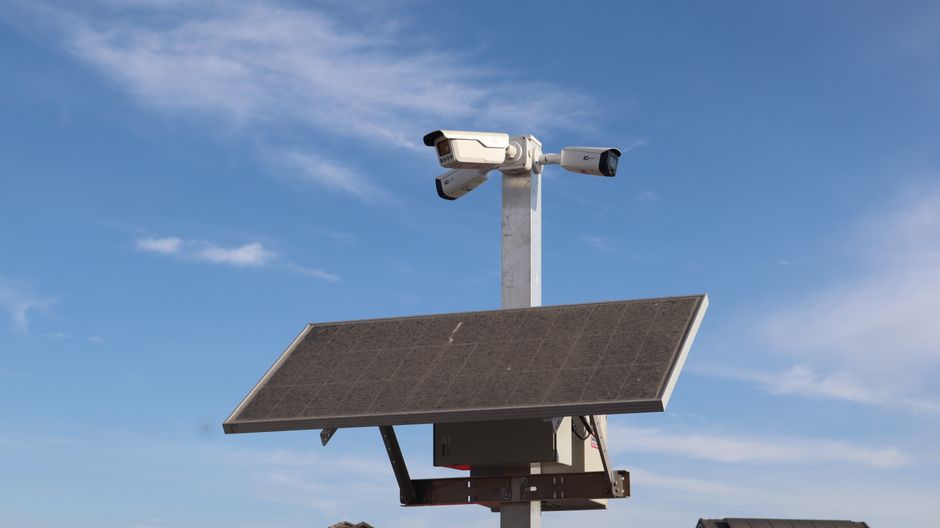
Photo by D Goug on Pexels
Flock Safety, the tech darling that turned suburban neighborhoods into the equivalent of an East German border checkpoint, has just run smack into a very traditional, very stubborn constitutional speed bump called the Fourth Amendment.
The Panopticon Next Door
If you haven’t had the pleasure of driving past one of Flock’s solar-powered, high-definition license plate-reading cameras yet, consider yourself lucky. They are sprouting up on utility poles faster than overpriced coffee shops. The pitch is simple: let private companies and local law enforcement build a frictionless, pan-optic web of surveillance so we can all feel “safe” from porch pirates and rogue gardeners.
Except, as a recent federal court ruling reminded us, the U.S. Constitution has this annoying habit of getting in the way of lazy police work. A federal judge formally ruled that a sheriff’s deputy violated a woman’s Fourth Amendment rights by using the Flock network to track her vehicle without so much as a polite “pretty please” to a judge for a warrant.
Warrants Are So Last Century
Let’s be honest for a second. Asking law enforcement to get a warrant in the era of automated surveillance feels a bit like asking someone who grew up typing in Python to suddenly rewrite everything in R—painful, archaic, and seemingly beneath their dignity. Why bother with the pesky burden of probable cause when you can just query a private, nationwide database that logs the movements of millions of unsuspecting citizens?
It’s the digital equivalent of leaving your front door unlocked, inviting the entire neighborhood in, and then getting mad when someone rifles through your sock drawer. Flock makes mass surveillance as easy as tapping a screen. Frankly, even as someone who hypocritically owns several iPhones despite a deep-seated spiritual preference for OnePlus and Oppo, I draw the line at my daily commute being cataloged by a private vendor whose data retention policies are probably read by approximately zero people.
A Speed Bump for the Surveillance State
This ruling is a refreshing reminder that the Bill of Rights applies even when the technology tracking you is shiny, cloud-connected, and mounted next to a ‘Slow Children Playing’ sign.
Law enforcement loves to treat mass data aggregators like a limitless buffet, but this judge just put up the “Closed” sign. Until the courts figure out how to reconcile our constitutional rights with a corporate-sponsored surveillance state, maybe we can slow down on turning every intersection into an episode of Black Mirror. Or, at the very least, make them use wired charging for their cameras—if the battery dies, maybe we get a few hours of privacy.
Source reference: techcrunch
Disclaimer: This article was generated and formatted with the assistance of Artificial Intelligence.