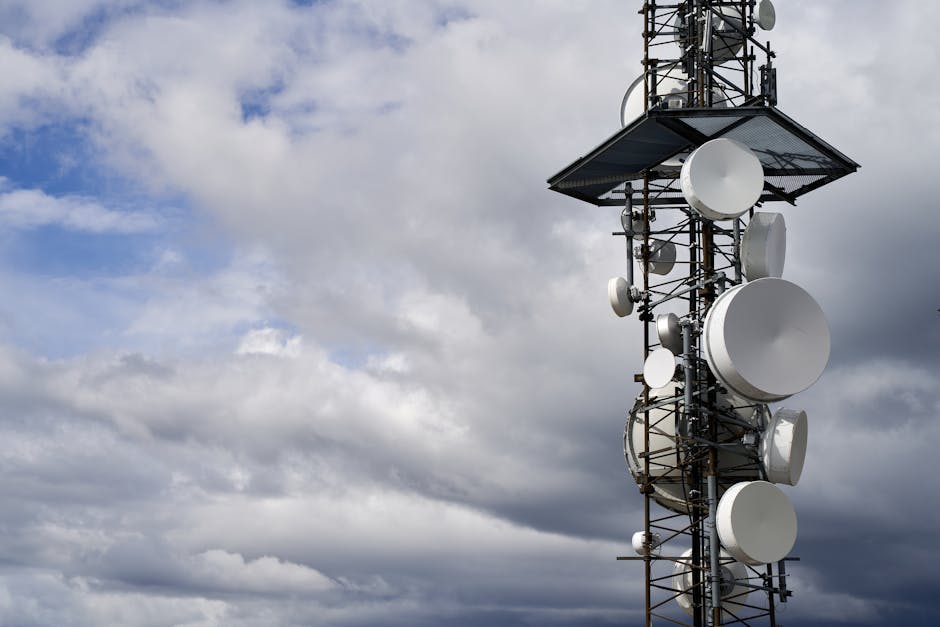
Photo by Barnabas Davoti on Pexels
Picture this: you are running a utility monitoring station out in the desolate middle of nowhere, or perhaps orchestrating a billion-dollar construction site miles away from the nearest civilization, and your internet connection decides to take an unannounced, highly inconvenient mental health day.
Let’s face it. Relying on traditional internet infrastructure at a remote site is a bit like trusting a smartphone with three percent battery to survive a cross-country road trip. It works right up until the exact moment you need it most. When your connection drops, operations halt faster than you can say “buffer,” turning a high-tech facility into an expensive paperweight.
The Remote Site Reality Check
We’ve all been there—or at least, anyone who has ever tried to run mission-critical operations outside of a downtown metropolitan fiber-optic bubble has. Remote locations are notorious black holes for reliable connectivity. You are dealing with weather, distance, and local wildlife that apparently view your telecom cables as gourmet spaghetti.
Without a stable connection, security feeds go dark, real-time data transmission flatlines, and your team is left shouting into the void. It’s the kind of digital agony that makes you want to throw your Bluetooth earbuds into traffic—though, to be fair, I still love my Bluetooth buds just as much as my trusty wired earbuds when I’m chained to a desk. The point is, downtime in the field isn’t just annoying; it’s a productivity killer.
Enter the Hardware Cavalry: 5Gstore
So, how do we fix this modern-day tragedy without moving your entire multi-ton construction office into a downtown Starbucks?
The answer lies in robust, enterprise-grade hardware solutions designed specifically to laugh in the face of spotty signals. Deploying specialized gear from 5Gstore bridges the gap between “hopelessly disconnected” and “bulletproof reliability.”
Here is why upgrading your remote site toolkit actually moves the needle:
- Cellular Failover Magic: If your primary line goes down, a solid cellular router steps in instantly. It’s like having a backup generator, but for your sanity and data packets.
- Industrial-Grade Durability: This equipment is built to withstand environments that would make standard consumer routers burst into tears.
- High-Gain Antennas: Because sometimes you need to literally point hardware toward the nearest cell tower and ask it nicely for a better signal.
Staying Connected When the World Drops Out
Let’s be honest with ourselves. We live in a world where staying offline is practically a violation of human rights (or at least corporate policy). Relying on duct tape and prayer to keep a remote site online is a strategy best left in the last century.
By integrating reliable cellular hardware solutions into your remote architecture, you ensure that your data keeps flowing, your cameras keep recording, and your operations stay upright. It’s a seamless fix to a very loud, very frustrating problem—saving you from endless headaches and keeping your remote sites running smoother than a fresh software update.
Source reference: techicy
Disclaimer: This article was generated and formatted with the assistance of Artificial Intelligence.