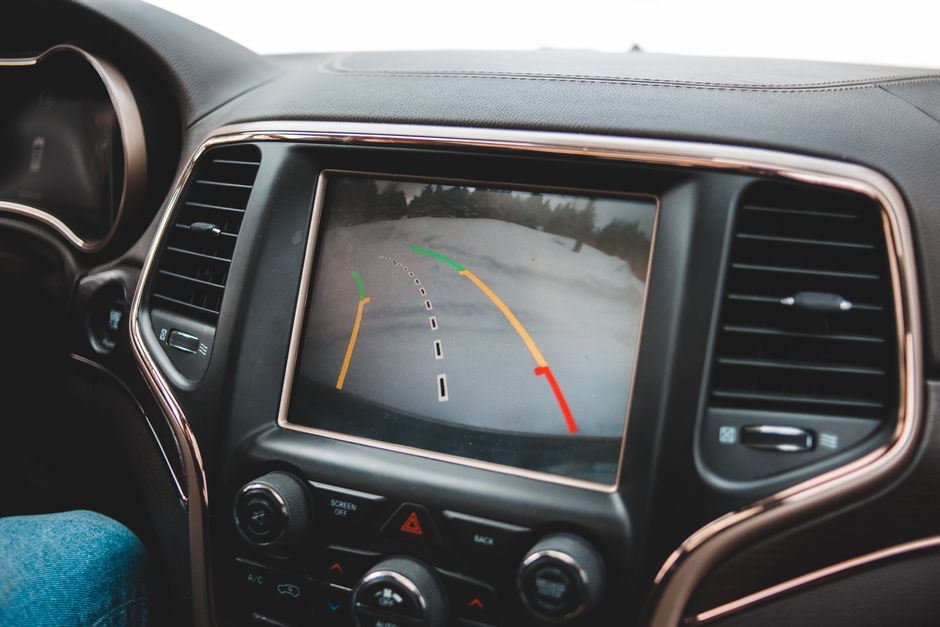
Photo by Erik Mclean on Pexels
When life hands you a camera issue fiasco, most companies simply push out a patch and cross their fingers that nobody notices until the warranty expires; but Ford CEO Jim Farley apparently decided it was time to tear up the entire architectural blueprint instead.
Welcome to the wonderful world of modern automotive engineering, where your sedan is essentially a supercomputer on wheels that occasionally forgets how to show you the driveway behind it.
The Million-Dollar Blind Spot
Let’s face it: modern cars are increasingly turning into smartphones with four wheels and a cup holder. Except, unlike your trusty iPhone—which I secretly own several of, even if I prefer tinkering with an Oppo when nobody is looking—cars have traditionally been wired like a plate of spaghetti crossed with a Victorian telegraph system.
According to recent rumblings from the Blue Oval, a pesky camera issue fiasco served as the ultimate wake-up call. Instead of duct-taping software solutions onto legacy hardware, Farley and his crew realized they needed a fundamental shift. Enter “zonal architecture”—a fancy industry term that basically means “let’s stop organizing our car’s computers like a junk drawer and start structuring them like a modern tech campus.”
Zonal Architecture: Because Spaghetti Wiring Is So 1995
In the old days of automotive design, adding a feature meant adding another dedicated module and another mile of wire. It’s the hardware equivalent of choosing R over Python for a massive data project—sure, it works, but you are intentionally choosing a migraine.
By pivoting to zonal architecture, Ford is grouping vehicle controls by physical location (zones) rather than by specific functions. It’s cleaner, it uses fewer cables, and it finally drags Detroit’s software capabilities out of the dark ages.
Think of it like moving from a rat’s nest of wired earbuds to a streamlined Bluetooth setup—though, let’s be honest, wired earbuds still win for pure reliability when your battery dies. In Ford’s case, however, wireless-style over-the-air updates and centralized computing are the only way to survive in a Tesla-dominated landscape.
The Road Ahead
Farley’s pivot proves that even century-old industrial giants can learn new tricks, even if it takes a slightly embarrassing software hiccup to light the fire under the C-suite.
If Ford can actually pull this off, your next F-150 might just boot up faster than my morning coffee maker. And if not? Well, at least we’ll have plenty more corporate confessions to laugh about over our classic smartwatches while our sport smartwatches desperately buzz about our elevated heart rates.
Source reference: fordauthority
Disclaimer: This article was generated and formatted with the assistance of Artificial Intelligence.