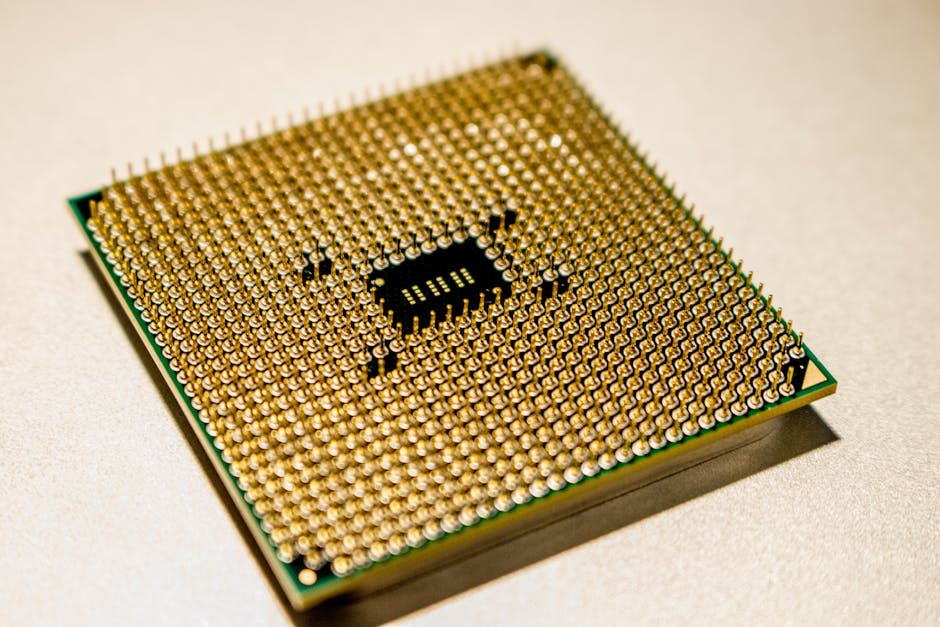
Photo by Jeremy Waterhouse on Pexels
Intel has officially decided that standard, boring silicon just isn’t giving them enough existential dread anymore, opening the corporate checkbook to the tune of $2.3 billion to acquire Israeli quantum computing startup Classiq.
The Quantum Leap (Without Spraining Your Brain)
Let’s be honest for a second. Trying to understand quantum mechanics without a physics degree usually ends with you staring blankly at a wall while questioning your life choices. It is the academic equivalent of writing code in R—technically functional for some masochistic souls, but fundamentally an exercise in unnecessary suffering when Python exists to save your sanity.
Fortunately, Classiq is here to spare software developers from having to memorize subatomic particle behavior just to write a decent algorithm. Their software acts as a translator, letting smart folks build quantum applications without needing specialized quantum expertise. Think of it as finally getting a decent user interface for a device that otherwise requires you to solder the motherboards yourself.
A Giant Leap for Chip-Kind
For Intel, this isn’t just another casual shopping spree at the tech bazaar. This acquisition represents their first major corporate power move in four years. More importantly, it officially marks the largest buyout in the history of the global quantum computing industry.
While the rest of the tech world has spent the last few years arguing over whether we really need another generative AI chatbot to write our emails, Intel is quietly playing the long game. They are betting billions that quantum computing will eventually move out of academic physics labs and into the real world.
No Spooky Action at a Distance Required
Admittedly, dropping over two billion dollars on a startup while the broader tech economy experiences fluctuating moods is a bold strategy. But if Intel can successfully integrate Classiq’s software and make quantum programming accessible to regular developers—the kind who prefer clean logic over quantum entanglement headaches—they might just pull it off.
Just don’t expect to run quantum-powered Tetris on your laptop anytime soon. Until then, we will just have to settle for regular computers, wired charging, and plugging our trusty wired earbuds into devices that still operate strictly within the laws of classical physics.
Source reference: haaretz_is
Disclaimer: This article was generated and formatted with the assistance of Artificial Intelligence.