Photo by 海风 张 on Pexels
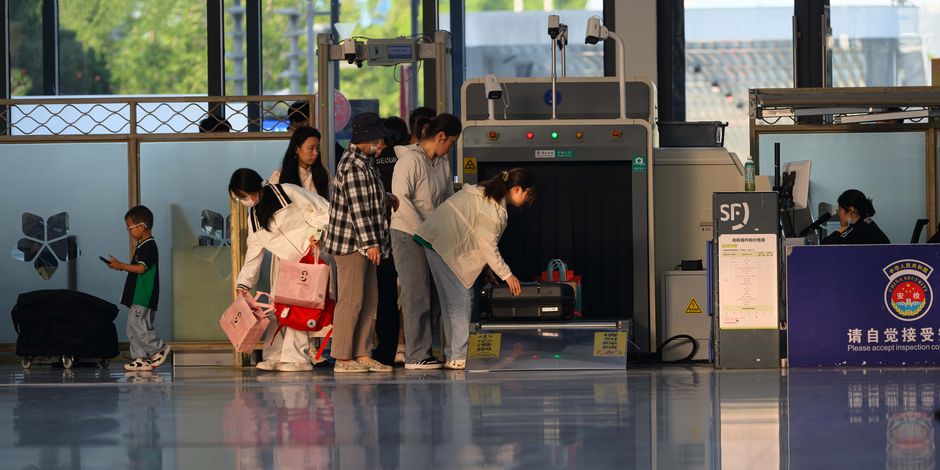
Remember when going through airport security felt less like a transit hub and more like an impromptu striptease where you anxiously surrendered your laptop, your belt, and dignity into grey plastic bins? If defense and technology giant Leidos has its way over the next 25 years, those miserable bins might soon look as antiquated as a rotary phone or wearing wired earbuds while untangling a knot that defies the laws of physics.
The Evolution of the Pat-Down
Airport screening has changed significantly since the post-9/11 era introduced us to the joy of taking off our shoes in public. Yet, the airport checkpoint remains the great equalizer of annoyance. Whether you are a Fortune 500 CEO or a backpacker smelling faintly of hostel regret, everyone is reduced to panic-sweating while a TSA agent yells about liquids in a quart-sized bag.
Leidos is looking at the next quarter-century with a simple mission: reshape the checkpoint while keeping security dead-center. Think of it less like a sci-fi dystopia and more like upgrading from R to Python—cleaner, infinitely more scalable, and far less likely to make you want to scream.
Smarter Scans, Fewer Sins
What does the future actually hold? As airports face mounting passenger volumes and the eternal dread of holiday travel rushes, physical infrastructure needs to work smarter, not harder. Leidos is leaning heavily into advanced imaging, artificial intelligence, and automated threat detection.
Instead of forcing you to divest yourself of every worldly possession like a modern-day monk, next-generation computed tomography (CT) and millimeter-wave technologies are evolving to spot hidden anomalies on the fly. It is kind of like comparing a classic analog watch to a sport smartwatch; both tell time, but one actually tracks your failing cardiovascular health while you sprint for Gate B42.
The Seamless Horizon
Of course, migrating millions of panicked flyers into a frictionless future is no walk in the park. It requires balancing airtight national security with the delicate art of passenger throughput. We aren’t quite at the “walk straight from the Uber to the plane seat” level yet, but the trajectory is clear.
As Leidos maps out the next 25 years, the goal is to make security infrastructure invisible, ambient, and hyper-efficient. Until then, keep your ID ready, try not to panic when you forget your belt has a metal buckle, and rest easy knowing that someone, somewhere, is trying to build a world where you never have to touch a community grey bin ever again.
Source reference: finanznachrichten_de
Disclaimer: This article was generated and formatted with the assistance of Artificial Intelligence.


