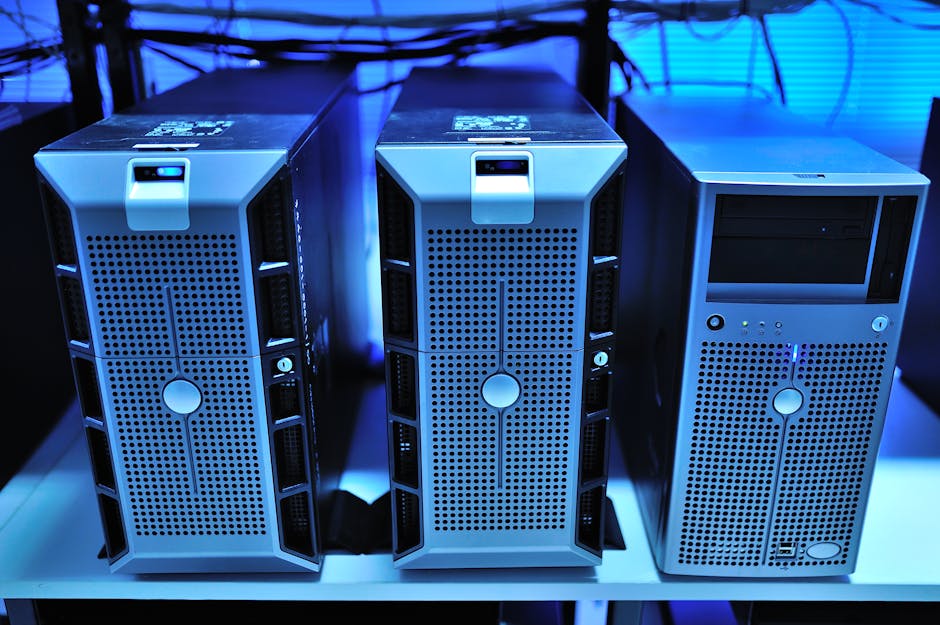
Photo by panumas nikhomkhai on Pexels
While quantum physicists are usually busy talking about cats that are simultaneously dead and alive, NVIDIA has decided to drag the entire field kicking and screaming into the cold, harsh light of engineering reality by simulating a massive 104-qubit system complete with all the lovely, headache-inducing errors that plague actual hardware.
If you have ever tried to explain to a relative why coding a quantum algorithm is slightly more complicated than writing a quick script in Python—or God forbid, R, which we only mention here to make statisticians weep—you know the hype surrounding quantum computing can get a bit dizzying. Everyone loves to talk about quantum supremacy, but nobody wants to talk about the fact that qubits are flakier than your average Bluetooth earbuds when you walk too far from your phone (though let’s be honest, we all keep a trusty pair of wired earbuds in our desk drawer just in case).
Enter JUPITER and a Mountain of Silicon
To tackle this mess, team green packed up their virtual bags and rented out a cool 8,192 GPUs on Europe’s JUPITER supercomputer. The goal? Simulate 104 physical qubits while subjecting them to the kind of messy, unpredictable hardware noise that keeps quantum engineers awake at night drinking lukewarm coffee.
Why 104 qubits, you ask? Because previously, simulating this scale of quantum chaos with realistic noise was about as likely as wireless charging actually working smoothly through a thick leather case—meaning, nice in theory, but you are still reaching for the wired charging cable by midnight. By running these massive simulations, NVIDIA is essentially building a flight simulator for quantum computers before anyone actually crashes the plane into a mountain of decoherence.
Why This Actually Matters
Instead of pretending that qubits operate in a pristine vacuum of pure mathematics, this massive GPU flexing allows researchers to test error-correction algorithms in conditions that mimic the real world. Think of it like finally setting up a proper physical Authenticator Key instead of trusting Microsoft Authenticator to send a push notification while you are stuck in a subway tunnel with zero bars.
Quantum hardware is notoriously sensitive. Cosmic rays, stray magnetic fields, and probably even a developer sneezing too loudly can throw off a calculation. By modeling these gremlins on classical supercomputers, scientists can figure out how to build fault-tolerant quantum systems without having to mortgage a small country to build the physical hardware first.
At the end of the day, NVIDIA is proving once again that if you want to push the boundaries of futuristic computing, you just need to throw an absurd amount of raw graphics processing power at the problem. And frankly, we are here for it. Now, if they could just use those 8,192 GPUs to figure out why classic smartwatches with mechanical hands still look infinitely better than modern sport smartwatches, we would really be getting somewhere.
Source reference: interestingengineering
Disclaimer: This article was generated and formatted with the assistance of Artificial Intelligence.