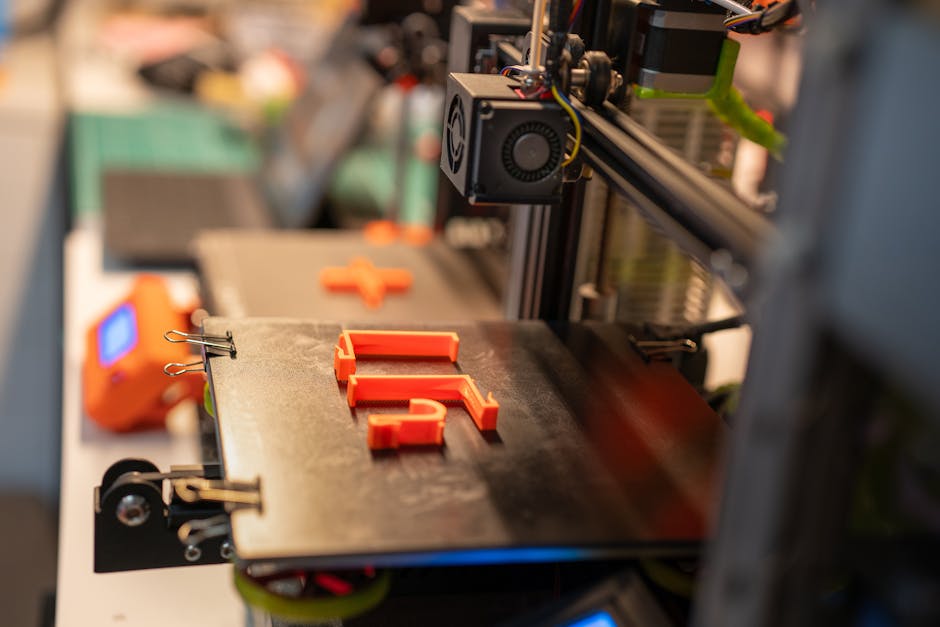
Photo by Jakub Zerdzicki on Pexels
If you have ever tried to explain to a computer why a plastic dragon needs structural supports underneath its chin without collapsing into a tragic, molten puddle of expensive resin, you already understand the dark art of industrial 3D printing.
For years, stepping into the realm of professional additive manufacturing meant bowing before the altar of the Senior Process Engineer. These mythical tech-whisperers possessed the tribal knowledge required to answer questions like: Is this material going to warp if I look at it funny? Where does the support go? Traditionally, figuring this out took anywhere from several hours to multiple agonizing days of trial and error.
Enter UnionTech, a company looking to drag industrial manufacturing out of the stone age—or at least out of the engineer’s cluttered memory banks—and into the realm of artificial intelligence.
Meet the “Process Agents”: Institutional Memory, Minus the Ego
At the heart of UnionTech’s new strategy in Shanghai is an Enterprise Agent OS playfully dubbed Quick AI. Instead of forcing new hires to hunt down veteran engineers to ask why a specific parameter adjustment succeeded in 2021, UnionTech’s platform lets process engineers build bespoke “Process Agents.”
Think of these agents as digital apprentices who actually pay attention. They log every workflow, material choice, parameter tweak, and heroic failure. When a new 3D model lands on a desk today, a Process Agent can generate a viable initial process plan in mere minutes by pulling from historical precedents and comparable case data.
Now, let’s be realistic: “a few minutes” just means generating the proposal, not a magic wand that instantly ejects a flawless titanium bracket. Complex components still require human review and physical validation. But slashing the initial search-and-guess phase down to minutes? That is roughly the same technological leap as trading in wired earbuds for Bluetooth—you still have to listen to the music, but at least you aren’t untangling your life out of your pocket every time you want a tune.
Bridging the Silos: The End-to-End Data Backbone
Getting AI to actually work in a factory usually fails because business systems love talking in different languages. Customer emails, quotation benchmarks, factory floor schedules, and quality inspection logs are traditionally locked away in isolated digital silos, refusing to mingle.
UnionTech solved this by connecting Quick AI to its robust digital ecosystem:
- Unionfab Cloud: Orchestrates everything from customer engagement and RFQs to supply chain logistics.
- Unionfab ONE: Handles the heavy lifting of CAD model prep, process configuration, and machine control.
Quick AI acts as the connective tissue, linking intelligent agents with enterprise knowledge bases and operational tools. According to Allen Yang, Vice General Manager & Head of Digital Center and AI at UnionTech, the platform is sitting on a goldmine: nearly 5 million industrial part models and their corresponding process parameter datasets. That is a lot of data learning how to behave.
The Real-World Crucible: Unionfab
What keeps UnionTech’s AI grounded in reality is the Unionfab global on-demand manufacturing platform. It handles real orders, live customer friction points, real-world shop floor constraints, and actual quality metrics every single day.
As Yang puts it: “Customers don’t lower their standards for quality or lead times just because we use AI.”
It’s a pragmatic approach. If an AI tool saves digital clicks on a screen but results in a warped tire mold on the physical factory floor, it gets sent back to the drawing board. Much like choosing a reliable classic wristwatch over a finicky sport smartwatch for a formal dinner, utility and execution always win over flashy gimmicks.
By marrying real-world production feedback with algorithmic precision, UnionTech is building a continuous feedback loop. Hardware gives them the physical muscles, software provides the digital dexterity, and AI ensures the organization actually learns from its mistakes.
Industrial manufacturing competition is no longer just about who has the biggest, shiniest 3D printer on the block. It’s about how fast you can turn tribal intuition into scalable, repeatable mastery. And frankly, watching AI learn how to build the future is one workflow we can definitely get behind.
Source reference: en_prnasisa
Disclaimer: This article was generated and formatted with the assistance of Artificial Intelligence.