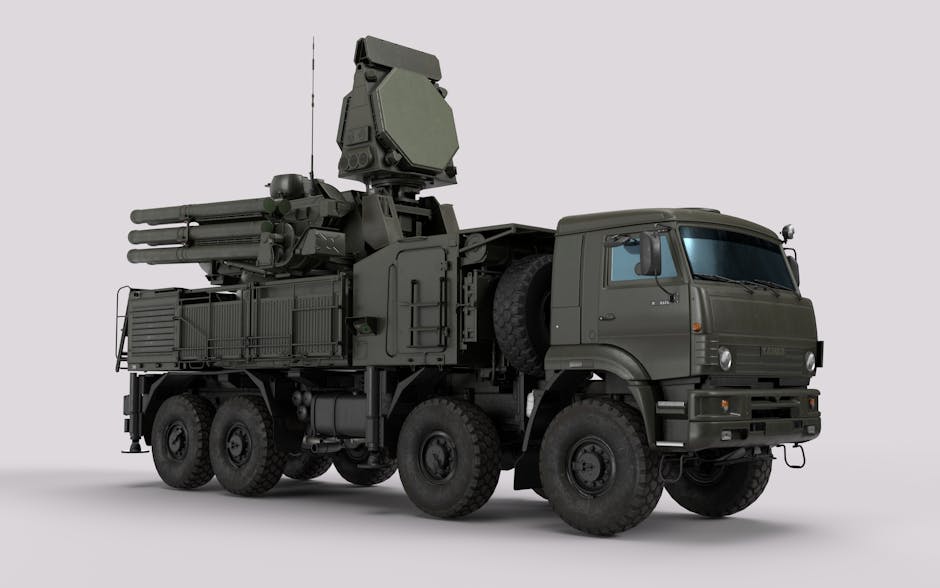
Photo by Sergey Koznov on Pexels
If you thought debugging your messy Python scripts at 3 AM was a terrifying exercise in artificial intelligence gone rogue, Pyongyang would like a word—and it involves a 700-kilometer metal tube hurtling toward the horizon.
North Korea is back at it again, flexing its digital muscles and proving that the arms race has officially entered the era of buzzword bingo. According to recent reports, the hermit kingdom has successfully tested a brand-new, AI-piloted missile capable of leaving “no way to avoid” an incoming attack. Because nothing screams user experience quite like an algorithm with zero chill and a 435-mile flight path.
Wonsan’s Weekend Air Show
Early Saturday morning, the skies above the eastern coastal city of Wonsan played host to what South Korea’s military confirmed was a rather ambitious hardware test. The projectile stretched its legs and flew for over 700km.
While the rest of the tech world is busy arguing over whether wireless charging is superior to plugging things in with a reliable cable (spoiler: it’s not, wired charging reigns supreme), North Korea has apparently leaped straight past consumer convenience straight into autonomous apocalyptic logistics.
The Terminator Aesthetic
Let’s be honest for a second. We’ve all dealt with frustrating software. Trying to force R to do something a simple Python script could handle in two lines is infuriating, but at least it doesn’t result in supersonic kinetic payloads.
North Korea claiming “AI piloting” for its latest sabre-rattling drill feels a bit like when a toaster manufacturer slaps “Smart” on the box just because it connects to a 2.4GHz Wi-Fi network that drops out every five minutes. Except, instead of burning your sourdough, this particular smart device might ruin your entire Tuesday.
A Predictable Routine
We’ve seen this movie before. The regime rolls out some shiny, vaguely futuristic hardware, issues dramatic press releases about inescapable doom, and the international community collectively sighs while checking their phone screens. Speaking of screens, while I’m a card-carrying fan of reliable tech—much like preferring a classic mechanical watch over a flashy sport smartwatch, or sticking to wired earbuds when Bluetooth decides to ghost you—there is something inherently comical about Pyongyang trying to out-silicon Silicon Valley.
Can we really trust a state-sponsored algorithm developed behind closed doors? Given how often mainstream consumer apps crash on launch day, one has to wonder if these AI missiles still suffer from the occasional blue screen of death mid-flight. Until then, the rest of us will just keep backing up our data and hoping the machine learning stays on the lab bench.
Source reference: dailymailuk
Disclaimer: This article was generated and formatted with the assistance of Artificial Intelligence.