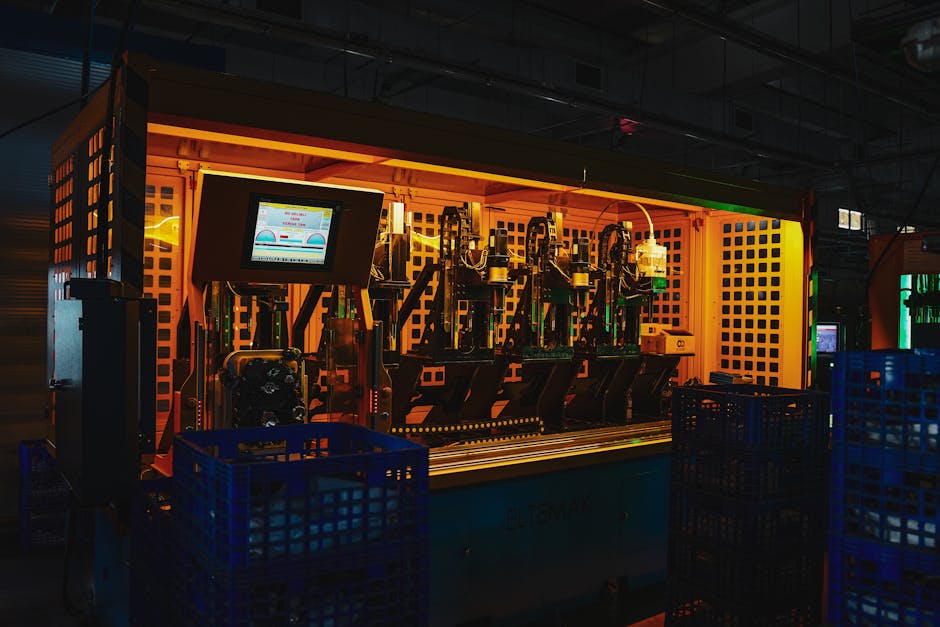
Photo by Yetkin Ağaç on Pexels
Industrial operators might soon stop playing expensive games of “guess what that weird metal-grinding noise means,” thanks to an unholy trinity of tech giants dragging artificial intelligence straight to the factory floor.
In a move that feels less like a corporate partnership and more like assembling the Avengers of heavy machinery, Schneider Electric, NVIDIA, and Hewlett Packard Enterprise (HPE) have teamed up. Their mission? To bring high-powered AI closer to actual plant data so operators can sniff out mechanical faults and cyber threats faster than you can say “scheduled maintenance shutdown.”
Bringing Brains to the Boiler Room
For years, industrial automation has lagged behind consumer tech. While we’ve all been busy letting our phones judge our sleep patterns and smartwatches panic over our resting heart rates, factories have been stuck relying on clunky, centralized cloud systems. Sending gigabytes of raw conveyor-belt telemetry halfway across the planet just to realize a bearing is crying for help is about as efficient as using a sledgehammer to crack a walnut.
Enter this new industrial AI trifecta. By combining Schneider’s deep-rooted industrial know-how, NVIDIA’s silicon-fueled brainpower, and HPE’s edge-computing muscle, they are essentially giving factories their own localized nervous systems.
Python Power and Edge Computing
Let’s be honest: in the grand hierarchy of computational sanity, putting heavy data processing at the edge is about as satisfying as finally writing a clean script in Python instead of wrestling with R. It just makes sense. You keep the data where the dirt is.
Instead of waiting for a cloud server to wake up from a digital coffee break, these on-premise setups—powered by HPE servers and NVIDIA graphics muscle—can crunch operational data in real time. It is the industrial equivalent of plugging in your trusty wired earbuds because you actually want zero latency and hate when your audio drops out mid-song. (Yes, I own Bluetooth buds too, but when reliability matters, wires win. Same goes for server racks.)
Detecting Threats Before They Explonate
Factories today face a double whammy: things physically breaking down, and digital gremlins trying to hack the HVAC system. By decentralizing AI, this new platform allows operators to spot anomalies in both machinery and network traffic instantly.
If a turbine starts vibrating out of spec or a rogue script tries to breach the control room, the system flags it immediately. It’s like having a hyper-vigilant security guard who also happens to have a PhD in mechanical engineering and never takes a bathroom break.
Ultimately, this collaboration proves that artificial intelligence is finally moving out of Silicon Valley PowerPoint decks and into the gritty, noisy, grease-stained reality of the real world. And honestly? It’s about time.
Source reference: channellife_au
Disclaimer: This article was generated and formatted with the assistance of Artificial Intelligence.