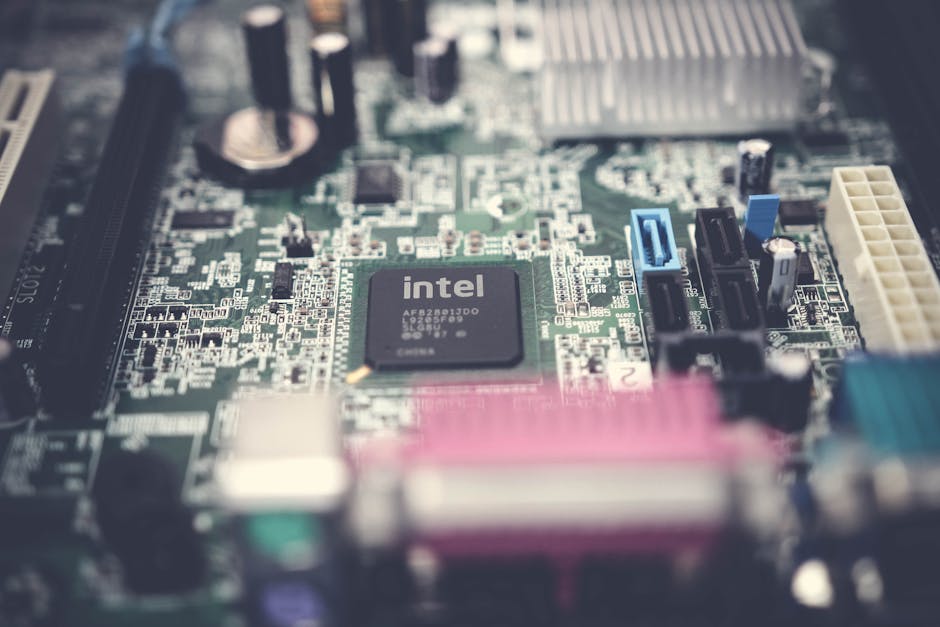
Photo by Pok Rie on Pexels
While you are busy agonizing over complex ransomware vectors, zero-day browser exploits, and whether clicking that sketchy email link will summon the digital apocalypse, your motherboard’s dusty little debug header is quietly sitting in the corner like an old Victorian butler—polite, unassuming, and holding all your deepest secrets for anyone with a ten-dollar logic board and a dream.
Ah, desktop hardware. We treat our custom rigs like impenetrable fortresses of solitude. We install beefy liquid coolers, slap on RGB lighting that could guide a commercial airliner, and trust our operating systems to keep the bad guys out. But as security researchers keep proving, physical proximity remains the ultimate “get out of jail free” card for hackers. And right there on your shiny circuit board, hiding beneath that tangle of braided cables, is a throwback interface waiting to spill the beans.
A Ghost from the Past (That Refuses to Retire)
Debug headers—those little clusters of pins traditionally used by manufacturers to test and troubleshoot hardware during production—are the motherboard equivalent of leaving your front door wide open because you trust the neighborhood raccoons. They speak a language as old as time, and they bypass your fancy OS-level encryption with the casual indifference of a teenager ignoring chores.
Securing your operating system with advanced encryption is a bit like coding complex predictive models in Python—elegant, powerful, and deeply satisfying. Relying on an unpatched, exposed hardware debug header to keep your data safe, however, is the equivalent of trying to analyze massive financial datasets in R while your computer slowly catches fire. It technically functions, but you are inviting pure chaos into your life.
Cheap Thrills for Digital Burglars
You might imagine that executing a physical hardware attack requires a Hollywood-grade lab, a glowing hacker hoodie, and a budget the size of a small nation’s GDP. Think again.
As it turns out, compromising these vintage little ports requires hardware so cheap you could probably fund it by checking the couch cushions for spare change. Armed with a budget logic board and a few minutes of uninterrupted access, an attacker can tap directly into the bus and read memory contents that were supposed to stay safely locked away. It is faster than wireless charging on a Tuesday afternoon—and significantly more invasive.
Of course, Apple users might smirk at this messy Windows-and-Linux hardware drama from the comfort of their sleek, welded-shut ecosystem. And yes, as the owner of three different iPhones, I have to admit their hardware lock-in is tighter than a drum. But let’s not pretend Apple hasn’t had its own share of silicon-level wake-up calls over the years. Nobody’s hands are entirely clean in this silicon circus.
How to Sleep Soundly Again
So, what’s a paranoid tech enthusiast to do? Short of encasing your desktop in poured concrete or standing guard with a medieval crossbow, your options are mostly about physical security.
If your threat model includes physical intruders—like nosy roommates, rogue office cleaners, or corporate spies with a penchant for cheap electronics—you need to keep your physical chassis locked down. Don’t leave your tower under a desk in an open-plan office where anyone with a screwdriver can lean down and harvest your credentials.
Ultimately, this discovery is a humbling reminder of how much we rely on the invisible plumbing of our tech stack. We obsess over software patches while our motherboards are practically leaving the keys in the ignition. Time to check your chassis, lock your office, and maybe give that old debug header a stern, disappointed look.
Source reference: xda_developers
Disclaimer: This article was generated and formatted with the assistance of Artificial Intelligence.